
DNA Testing Explained: What to Know About Accurate, Reliable Results
DNA testing can provide important answers about biological relationships, identity, immigration cases, and certain legal matters. But not every DNA test follows the same process, and choosing the right test depends heavily on why you need the results and how you plan to use them.
Someone trying to establish a biological relationship for a legal matter may have very different requirements from someone dealing with immigration, an unavailable family member, or a post-mortem DNA question.
DATCS helps individuals, families, attorneys, and other professionals navigate DNA testing through professional specimen collection, identity verification, documented chain-of-custody procedures, and coordination with the appropriate laboratory process.
If you are unsure which test fits your situation, explore DATCS’s DNA testing services or contact DATCS before specimens are collected.
How Does DNA Testing Work?
DNA contains genetic information passed from biological parents to their children. Relationship testing examines selected genetic markers from two or more participants and uses those results to evaluate whether the claimed biological relationship is supported.
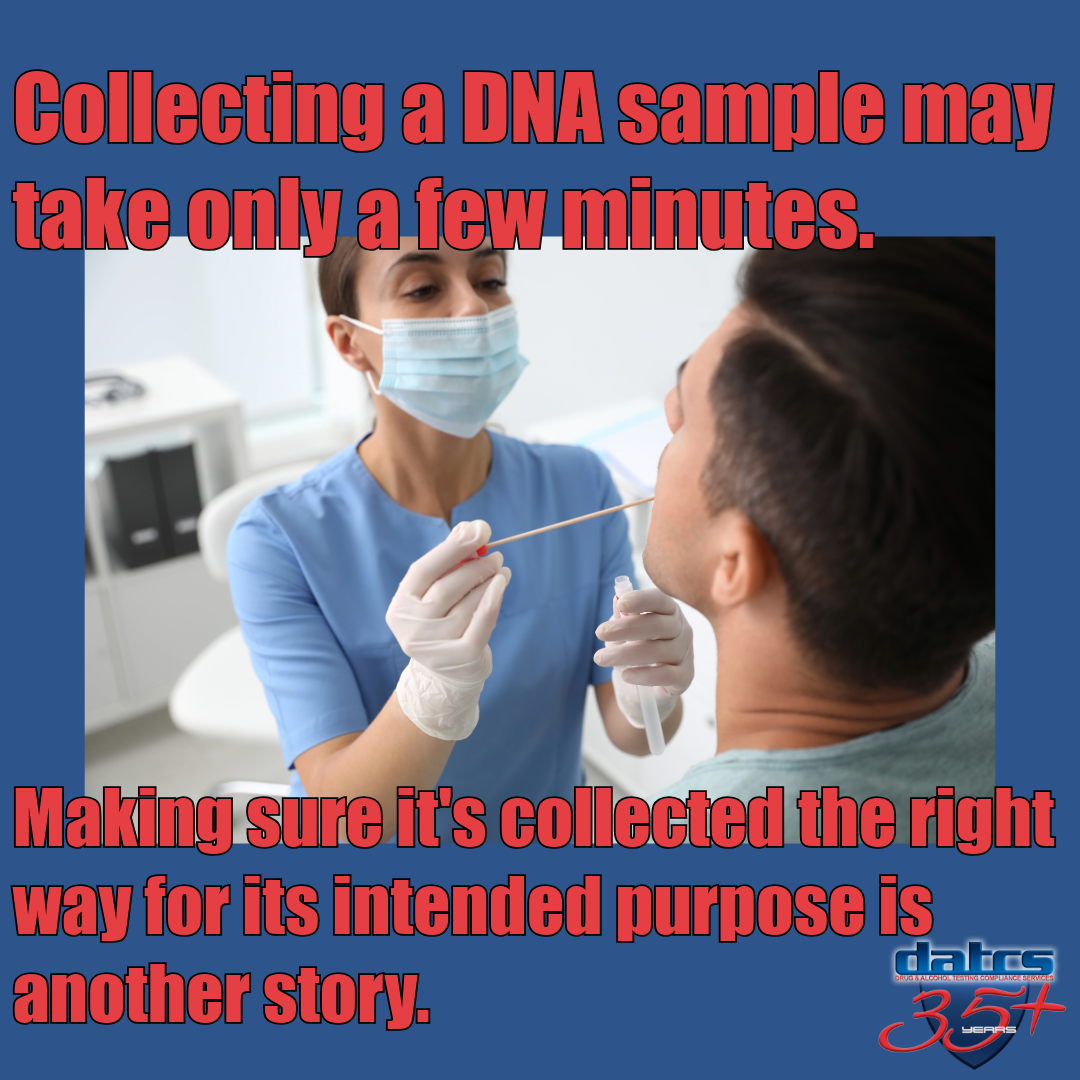
For routine relationship testing, DNA is commonly collected using a buccal swab, sometimes simply called a cheek swab. A collector gently rubs the swab against the inside of the participant’s cheek to collect cells for laboratory analysis.
Cheek-swab DNA collection is generally:
- Quick
- Noninvasive
- Painless
- Appropriate for adults and children
- Easier to collect and transport than a blood specimen
For U.S. immigration relationship testing, the Department of State identifies buccal swabs as the preferred collection technique because they are noninvasive, painless, and easier to ship. The Department also states that cheek-swab testing can provide accuracy equivalent to testing using blood specimens. Review the Department of State’s DNA relationship-testing procedures.
The collection itself may be simple. Determining which people need to be tested, what documentation is required, how the collection should be performed, and which testing process is appropriate can be considerably more complicated.
That’s where choosing the right DNA testing process becomes important.
What Types of DNA Testing Are Available?
The appropriate DNA test depends on the biological relationship being evaluated, the participants available for testing, where those participants are located, and whether the results are intended for a legal or government purpose.
Paternity and Maternity DNA Testing
Paternity testing evaluates a claimed biological relationship between a child and an alleged father. Maternity testing evaluates the claimed relationship between a child and an alleged mother.
Testing may be sought in connection with matters such as:
- Paternity questions
- Child support or custody proceedings
- Birth-record questions
- Estate or inheritance matters
- Immigration proceedings
- Other situations requiring documentation of a biological relationship
Testing the biological mother is not necessary in every paternity case. However, depending on the circumstances, additional known family members can sometimes help strengthen the analysis or address a more complex relationship question.
The Department of State similarly advises that including both putative biological parents, when possible, can strengthen DNA evidence in certain citizenship-related cases. Read the State Department’s DNA and citizenship guidance.
If you are unsure which participants should be tested, DATCS can help determine the appropriate collection process before appointments are scheduled. Learn more about DNA relationship testing.
What If a Parent Is Unavailable for DNA Testing?
Not every family has the ability to test a parent directly.
An alleged parent may be deceased, unavailable, unwilling to participate, or impossible to locate. In some situations, DNA testing involving other biological relatives may provide another avenue for evaluating the claimed relationship.
Depending on the case and available participants, options can include:
- Full-sibling testing
- Half-sibling testing
- Grandparentage testing
- Avuncular testing involving an aunt or uncle
- Other case-specific kinship comparisons
These cases are more statistically complex than a direct parent-child comparison. The testing laboratory may recommend including additional known relatives when doing so could strengthen the analysis.
This is also why indirect relationship testing should not automatically be described as “conclusive.” The strength of the result depends on the people tested, the relationship being evaluated, the genetic information available, and the statistical findings produced by the laboratory.
If an alleged parent is unavailable, contact DATCS before deciding who should be tested. Proper case design can matter just as much as specimen collection.
Twin Zygosity Testing
Twin zygosity testing evaluates whether twins are monozygotic, commonly described as identical, or dizygotic, commonly described as fraternal.
Parental DNA is generally not necessary to answer that particular question, although the laboratory should determine the appropriate case design.
Immigration DNA Testing
Immigration DNA testing requires a much more controlled process than simply purchasing a personal DNA test.
DNA testing may be suggested when available documents do not adequately establish a claimed biological relationship. The test is voluntary, and DNA results by themselves do not guarantee approval of a visa or other immigration benefit.
For immigrant-visa DNA testing, the U.S. Department of State requires the process to be initiated through an AABB-accredited relationship-testing laboratory. Testing kits, collections, shipping, and submission of results must follow the authorized process. Review the official immigration DNA testing procedures.
AABB likewise explains that U.S. immigration, visa, passport, and citizenship DNA cases should be initiated with an AABB-accredited relationship-testing facility. Read AABB’s DNA relationship-testing FAQs.
Current facilities can also be checked through the AABB-accredited relationship-testing facility directory.
If you have received a request for DNA testing from USCIS, a U.S. embassy or consulate, or another government agency, do not simply purchase an at-home DNA kit and submit the results yourself. Contact DATCS first so the requirements of the case can be reviewed before a collection is arranged.
Post-Mortem DNA Testing and DNA Profile Preservation
Sometimes questions about biological relationships arise after someone has died.
A family may need to explore DNA testing because of a paternity or relationship question, estate matter, identification issue, or another circumstance in which DNA could provide important information.
Post-mortem cases require careful planning because factors such as specimen availability, authorization, custody, laboratory capabilities, and the intended use of the result can affect how the case should proceed.
DATCS has separate resources covering two important situations:
- https://datcs.com/2025/11/04/getting-answers-a-comprehensive-guide-to-postmortem-dna-testing/ explains situations in which DNA questions arise following a person’s death.
- https://datcs.com/2026/07/20/post-mortem-dna-profiles-preserve-dna-before-burial-or-cremation/ explains why families may want to consider preserving a DNA profile before an immediate testing need exists.
When post-mortem testing or preservation is being considered, time can matter.
Families should contact a qualified provider as soon as practical and, whenever circumstances allow, before burial or cremation. Whether a particular specimen is suitable cannot be determined from a general list alone. The circumstances of the case, specimen condition, authorization, custodian, intended testing, and laboratory requirements all need to be considered.
Forensic and Specialized DNA Testing
Some DNA cases do not begin with a simple cheek swab.
Forensic DNA testing may involve biological material recovered from an object or another nonstandard specimen. Depending on the circumstances, testing might involve screening an item, attempting to develop a DNA profile, or comparing a recovered profile with a known reference specimen.
These cases can be affected by:
- The type and condition of the item
- How the item has been stored and handled
- Possible contamination
- Multiple potential DNA contributors
- The availability of a reference specimen
- Consent and lawful possession
- The intended use of the results
Finding someone’s DNA on an object does not automatically establish how or when the DNA was deposited.
That distinction is important. Laboratory findings must be interpreted within the limitations of the particular test and the circumstances surrounding the specimen.
If you believe an item may contain testable biological material, speak with DATCS before cleaning, altering, packaging, or shipping the item. Review the available options on the DATCS DNA testing page.
Legal DNA Testing vs. At-Home DNA Testing
One of the most important decisions is whether DNA results may eventually be needed for an official or legal purpose.
The underlying laboratory analysis may be similar, but collection and documentation requirements can be significantly different.
A legal DNA collection generally involves safeguards such as:
- Verification of participants’ identities
- Identification documentation and, where required, photographs
- Collection by an independent qualified collector
- Appropriate participant or guardian authorization
- Documented chain of custody
- Secure specimen labeling, packaging, and transfer
- Testing through the appropriate qualified laboratory
An at-home test may be useful for private information, but a self-collected specimen generally does not have the same independent identity verification and documented chain of custody.
If there is any possibility that results could later be needed for court, child support, custody, immigration, an estate, benefits, or another official proceeding, discuss that requirement before samples are collected.
DATCS generally recommends beginning with the appropriate legal collection process when future official use is possible. Doing so can help avoid a situation where specimens must be collected and tested again because the original collection lacked the required documentation.
For testing associated with an order or legal proceeding, you can also review DATCS’s court-ordered testing services.
How Accurate Is DNA Relationship Testing?
DNA accuracy should be discussed in the context of the particular test and the statistical conclusion reported by the laboratory, rather than as one universal percentage.
For immigrant-visa cases, for example, the Department of State says consular officers may accept results reporting at least 99.5% certainty for paternity or maternity as sufficient to support a biological parent-child relationship. That is a government threshold for this particular immigration context, not an accuracy promise that should be applied to every kind of DNA test.
Sibling, grandparentage, avuncular, forensic, and other indirect comparisons involve different statistical analyses. Some cases may also benefit from testing an additional known biological relative.
For that reason, the actual laboratory report, rather than a generic marketing percentage, should provide the statistical conclusion for an individual case.
How Long Does DNA Testing Take?
Turnaround time varies by case.
Factors can include:
- The DNA test ordered
- Whether every required participant has been collected
- Whether participants live in different locations
- When all specimens reach the laboratory
- Missing or incomplete documentation
- Whether extended testing is required
- International shipping or embassy scheduling
- Unusual or forensic specimens
AABB reports that most relationship tests are reported in a week or less after all samples are received, while tests requiring additional or extended analysis may take longer. Review AABB’s DNA relationship-testing FAQs.
Ask for a case-specific estimate instead of relying on a universal turnaround promise.
Can DNA Test Participants Live in Different States?
Yes.
Family circumstances rarely fit neatly into one ZIP code. The child may live in Texas while an alleged parent lives in another state. Siblings might live hundreds of miles apart. Other relatives needed for a complex relationship test may be scattered across the country.
AABB confirms that accredited relationship-testing facilities can arrange to have participants collected either together or separately based on the circumstances of the case. AABB also notes that accredited facilities can arrange collections in locations worldwide.
Separate-location cases need to be coordinated so that:
- The correct people are tested
- The appropriate test is ordered
- Everyone uses the correct documentation
- Identity and authorization requirements are satisfied
- Samples remain associated with the same case
- The laboratory receives the necessary specimens
Immigration cases have additional requirements and must follow the process established by the appropriate accredited facility and government agency. Visa applicants and petitioners should not independently handle immigration kits when the official process requires controlled transfer.
More Than a Cheek Swab: Coordinating a DNA Case
Collecting a cheek swab may take just a few minutes.
Coordinating the correct DNA case can be considerably more complicated.
What happens when:
- The child is in Texas and the alleged father lives in another state?
- An important family member cannot participate directly?
- Someone who needs to be tested is deceased?
- Participants live in different countries?
- The DNA is needed for a legal or immigration matter?
- A nonstandard specimen or personal item may need to be evaluated?
These are situations in which planning the case before specimens are collected becomes particularly important.
DATCS can help review collection requirements, coordinate participants and collection locations when appropriate, verify identities, maintain necessary documentation, and help route specimens through the appropriate laboratory process.
Before collecting anything yourself, contact DATCS and explain your situation. Starting with the correct process can help prevent unnecessary recollections, delays, or a result that does not meet its intended purpose.
Choosing the Right DNA Test
Before scheduling a DNA collection, be prepared to explain:
- What biological relationship needs to be evaluated?
- Could the results be needed for court or another official purpose?
- Is immigration involved?
- Where does each participant live?
- Is an important participant unavailable?
- Is someone who would normally be tested deceased?
- Is any participant under 18?
- Are the alleged parents biologically related to one another?
- Has a participant had a blood transfusion, stem-cell transplant, or bone-marrow transplant?
- Are unusual specimens or personal items involved?
You do not need to know exactly which test to order before speaking with DATCS.
In fact, contacting DATCS before collecting specimens is often the better first step when a case involves legal requirements, multiple locations, immigration, missing family members, post-mortem DNA, or unusual specimens.
Get Help With Your DNA Testing Case
DNA testing can answer important questions, but reliable testing starts with choosing the right process.
DATCS helps clients navigate DNA collections involving biological relationships, legal documentation, immigration requirements, multiple participants or locations, and specialized circumstances.
Rather than guessing which test you need, tell us what you are trying to establish and how the results will be used.
Explore DATCS DNA testing services or contact your nearest DATCS location to discuss your DNA testing needs.
Frequently Asked Questions About DNA Testing
What is the difference between a legal DNA test and an at-home DNA test?
A legal DNA test uses documented procedures to verify participants’ identities and maintain chain of custody during collection, transfer, and laboratory processing. An at-home test generally relies on self-collected samples and therefore may lack the identity verification and custody documentation needed for many official purposes.
If there is any chance that your results will eventually be needed for court, child support, custody, immigration, inheritance, or another formal proceeding, tell DATCS before specimens are collected.
Can a DNA test be used in court?
DNA results intended for legal proceedings generally require appropriate identity verification, specimen collection, chain-of-custody documentation, and laboratory testing. Whether a particular report is ultimately accepted depends on the circumstances and requirements of the court or jurisdiction.
For cases already involving a legal order, review DATCS’s court-ordered testing services.
Does the mother have to participate in a paternity DNA test?
Not necessarily. Many paternity questions can be evaluated without testing the mother. However, there are circumstances where including an available biological mother or another known relative can strengthen the analysis or assist with a complex result. The appropriate participants should be determined based on the case.
What if the alleged father cannot be tested?
Other biological relatives may sometimes be tested when an alleged parent is unavailable. Depending on the family structure, options can include siblingship, grandparentage, avuncular testing involving an aunt or uncle, or another properly designed kinship comparison.
Because indirect relationship analysis is more complex, speak with DATCS before choosing participants.
Can people take the same DNA test in different states?
Yes. AABB explains that accredited facilities can arrange for participants to be collected separately when necessary. [https://ww…sting-faqs]
That makes it possible to coordinate some relationship cases even when family members live in different cities or states.
How is DNA usually collected?
A cheek or buccal swab is commonly used for relationship DNA testing. The swab collects cells from inside the participant’s cheek and is noninvasive and painless. The Department of State identifies buccal swabs as the preferred specimen collection method for immigration relationship testing. [https://tr…dures.html]
How long does a DNA test take?
Time varies according to the test, participants, specimen type and whether additional analysis is required. AABB says most relationship tests are reported within a week or less after all samples have been received, although more complex testing can take longer. [https://ww…sting-faqs]
How accurate is a DNA paternity test?
The answer depends on the laboratory’s statistical findings rather than a universal marketing percentage. For immigrant-visa cases, the U.S. Department of State accepts paternity or maternity results reporting at least 99.5% certainty as sufficient support for the biological relationship in that specific government context. [https://tr…dures.html]
The actual laboratory report should be used to describe the conclusion of an individual case.
Can DNA testing be performed after someone has died?
Potentially. Available options depend on the circumstances, authorization, available specimens, specimen condition, laboratory requirements, and purpose of the test.
Families facing an immediate post-mortem situation can read https://datcs.com/2025/11/04/getting-answers-a-comprehensive-guide-to-postmortem-dna-testing/ and https://datcs.com/2026/07/20/post-mortem-dna-profiles-preserve-dna-before-burial-or-cremation/.
Is DNA testing required for immigration?
Not automatically. DNA testing can be suggested when other evidence does not adequately establish a claimed biological relationship. The process is voluntary, and submitting DNA evidence does not guarantee an immigration or visa decision. Immigration testing must follow the applicable government and accredited-laboratory process. [https://tr…dures.html]
Do I need an AABB-accredited laboratory for immigration DNA testing?
For the U.S. immigration, visa, passport and citizenship DNA processes addressed by AABB, testing cases must be initiated through an appropriately AABB-accredited relationship-testing facility. AABB maintains a directory of accredited relationship-testing facilities. [https://ww…sting-faqs]
What should I do before scheduling a DNA test?
Start by explaining why you need DNA testing, what relationship is being evaluated, where the participants live, and whether the results may be used for court, immigration, inheritance, benefits, or another official matter.
That information can change which test and collection procedure you need.
Contact DATCS before collecting specimens if you are unsure.