National Recovery Month in the Workplace: Supporting Recovery While Maintaining Safety
Every workplace is made up of people, and many of those people have been affected by substance use disorders, either personally or through a family member, friend, or coworker. Recovery is not uncommon. It is happening every day in communities and workplaces across the country.
National Recovery Month provides employers with an opportunity to recognize the importance of recovery while reinforcing their commitment to workplace safety, accountability, and employee well-being. What does it look like to make a place for National Recovery Month in the workplace?
Supporting recovery does not mean lowering standards or overlooking unsafe behavior. Likewise, maintaining workplace safety does not require treating employees without compassion. The most effective organizations understand that these goals can work together.
By combining education, supervisor training, employee resources, and clear workplace policies, employers can help create an environment where recovery is respected and safety remains a priority.
Supporting recovery is not about lowering workplace standards. It is about helping employees access resources while maintaining the safeguards that protect everyone in the workplace.
What Is National Recovery Month?
National Recovery Month is an annual September observance that raises awareness about recovery from substance use and mental health conditions while recognizing the individuals, families, service providers, and communities that support recovery.
According to the CDC, Recovery Month has been observed every September since 1989. The observance celebrates the gains made by people in recovery from substance use disorders, promotes treatment and recovery practices, and recognizes the dedication of service providers and communities that help make recovery possible. [cdc.gov]
The Substance Abuse and Mental Health Services Administration (SAMHSA) defines recovery as:
“A process of change through which individuals improve their health and wellness, live self-directed lives, and strive to reach their full potential.” [samhsa.gov]
SAMHSA further explains that recovery represents a dramatic shift in expectations for positive outcomes among people experiencing mental health conditions, substance use disorders, or both. [samhsa.gov]
For employers, Recovery Month provides an opportunity to strengthen workplace programs that support both employee well-being and organizational safety.
Recovery Is Already Part of the American Workplace
Recovery is not a niche issue affecting only treatment facilities or healthcare providers.
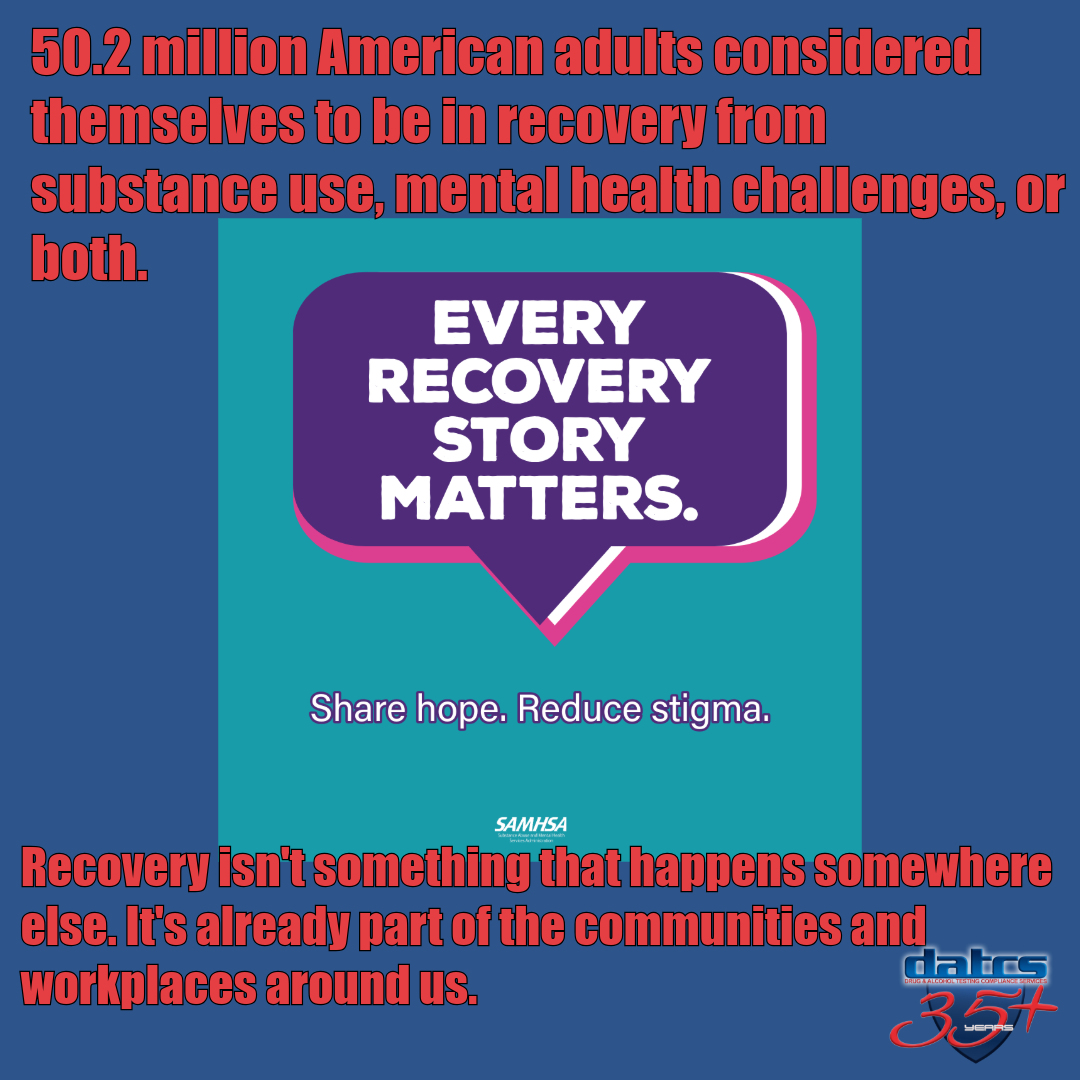
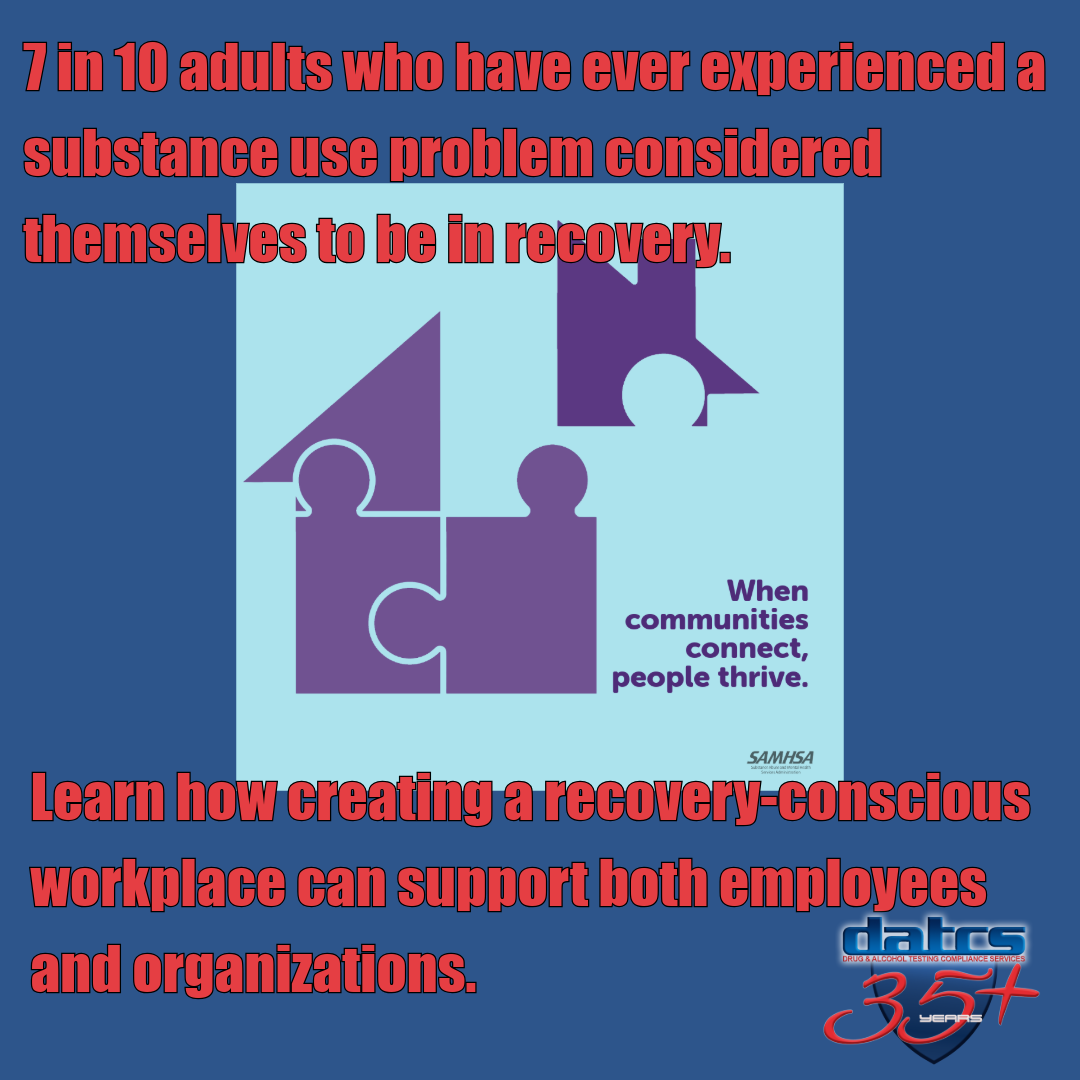
SAMHSA reports that 50.2 million American adults considered themselves to be in recovery from substance use, mental health problems, or both. The agency also reports that seven in ten adults who have ever experienced a substance use problem considered themselves to be in recovery. [samhsa.gov]
These individuals work in offices, manufacturing facilities, hospitals, schools, transportation companies, construction sites, and countless other workplaces.
The U.S. Department of Health and Human Services describes addiction as a chronic, treatable disease and reports that 48.4 million Americans, approximately one in six, are living with addiction. HHS also reports that among 40.7 million adults living with addiction in 2024 who did not receive treatment, 95.6 percent did not perceive a need for treatment. [hhs.gov]
These statistics highlight why education and awareness remain important. Many people who need assistance may never seek it on their own.
Employers are not responsible for providing treatment, but they can create workplaces that encourage employees to access appropriate resources while maintaining clear expectations for conduct, attendance, performance, and safety.
Why Recovery Matters to Employers
Work has an important role in many people’s recovery journeys.
Employment can provide structure, financial stability, social connection, responsibility, and a sense of purpose. At the same time, substance misuse can affect attendance, productivity, communication, judgment, and workplace safety.
For employers, supporting recovery is not simply a matter of compassion. It is also a practical workforce issue.
Organizations invest considerable time and resources into recruiting, onboarding, and training employees. When concerns are identified early and resources are available, an employee may be able to obtain help before workplace issues escalate into accidents, serious misconduct, or permanent separation from employment.
SAMHSA’s recovery framework emphasizes health, wellness, self-directed living, and reaching one’s full potential. The agency also states that people with mental health conditions or substance use disorders can recover or successfully manage their conditions. [samhsa.gov]
Recovery Month reminds employers that people should not be defined solely by a past struggle or health condition. Employees in recovery contribute valuable skills, experience, and knowledge to organizations across the country.
Building a Recovery-Friendly Workplace
A recovery-friendly workplace is not a workplace without standards.
Instead, it is a workplace where resources, expectations, and policies are communicated clearly and applied consistently.
Although SAMHSA does not prescribe a specific workplace model, the concept aligns with its broader emphasis on wellness, resilience, personal growth, and positive outcomes. [samhsa.gov]
One of the biggest barriers to recovery is stigma. Employees who fear embarrassment, discrimination, or job loss may avoid seeking help until problems become more severe.
Reducing stigma does not mean ignoring workplace concerns. It means focusing on facts instead of assumptions and treating employees with dignity throughout the process.
Characteristics of a recovery-friendly workplace may include:
- Clear workplace policies
- Employee education
- Supervisor training
- Access to assistance resources
- Confidential communication channels
- Consistent policy enforcement
- Respectful treatment of employees
- Objective workplace procedures
When employees understand expectations and know where to turn for assistance, organizations are often better positioned to address concerns before a crisis develops.
Recovery-friendly workplaces are not less accountable. They are simply more proactive.
The Employer's Role
Employers can play a meaningful role in supporting recovery while staying within their appropriate responsibilities.
Education
Education remains one of the most effective workplace tools.
Employees should understand:
- Workplace expectations
- Drug and alcohol policies
- Available support resources
- Safety responsibilities
- Possible consequences of policy violations
Ongoing education reinforces prevention efforts and helps employees make informed decisions.
Prevention
Effective prevention programs often include:
- Drug-free workplace initiatives
- Safety training
- Supervisor education
- Wellness programs
- Employee awareness campaigns
Prevention works best when it becomes part of an organization’s culture rather than a one-time training event.
Policy Development
A written drug-free workplace policy provides consistency and accountability.
Effective policies should explain:
- Who is covered
- Prohibited behaviors
- Testing circumstances
- Employee responsibilities
- Supervisor responsibilities
- Consequences for violations
- Available support resources
Policies should accurately reflect workplace practices and applicable legal or regulatory requirements.
Employee Assistance Resources
Employers are not treatment providers, but they can make resources available.
Useful resources may include:
- Employee Assistance Programs (EAPs)
- Health-plan support services
- Local treatment providers
- Community organizations
- Recovery resources
- Crisis assistance
SAMHSA’s Recovery and Recovery Support resources, SAMHSA RecoverMe, FindTreatment.gov, and Find Support can all serve as valuable reference points for employees seeking help. [samhsa.gov]
The Employer's Role
Employers can play a meaningful role in supporting recovery while staying within their appropriate responsibilities.
Education
Education remains one of the most effective workplace tools.
Employees should understand:
- Workplace expectations
- Drug and alcohol policies
- Available support resources
- Safety responsibilities
- Possible consequences of policy violations
Ongoing education reinforces prevention efforts and helps employees make informed decisions.
Prevention
Effective prevention programs often include:
- Drug-free workplace initiatives
- Safety training
- Supervisor education
- Wellness programs
- Employee awareness campaigns
Prevention works best when it becomes part of an organization’s culture rather than a one-time training event.
Policy Development
A written drug-free workplace policy provides consistency and accountability.
Effective policies should explain:
- Who is covered
- Prohibited behaviors
- Testing circumstances
- Employee responsibilities
- Supervisor responsibilities
- Consequences for violations
- Available support resources
Policies should accurately reflect workplace practices and applicable legal or regulatory requirements.
Employee Assistance Resources
Employers are not treatment providers, but they can make resources available.
Useful resources may include:
- Employee Assistance Programs (EAPs)
- Health-plan support services
- Local treatment providers
- Community organizations
- Recovery resources
- Crisis assistance
SAMHSA’s Recovery and Recovery Support resources, SAMHSA RecoverMe, FindTreatment.gov, and Find Support can all serve as valuable reference points for employees seeking help. [samhsa.gov]
The Employer's Role
Employers can play a meaningful role in supporting recovery while staying within their appropriate responsibilities.
Education
Education remains one of the most effective workplace tools.
Employees should understand:
- Workplace expectations
- Drug and alcohol policies
- Available support resources
- Safety responsibilities
- Possible consequences of policy violations
Ongoing education reinforces prevention efforts and helps employees make informed decisions.
Prevention
Effective prevention programs often include:
- Drug-free workplace initiatives
- Safety training
- Supervisor education
- Wellness programs
- Employee awareness campaigns
Prevention works best when it becomes part of an organization’s culture rather than a one-time training event.
Policy Development
A written drug-free workplace policy provides consistency and accountability.
Effective policies should explain:
- Who is covered
- Prohibited behaviors
- Testing circumstances
- Employee responsibilities
- Supervisor responsibilities
- Consequences for violations
- Available support resources
Policies should accurately reflect workplace practices and applicable legal or regulatory requirements.
Employee Assistance Resources
Employers are not treatment providers, but they can make resources available.
Useful resources may include:
- Employee Assistance Programs (EAPs)
- Health-plan support services
- Local treatment providers
- Community organizations
- Recovery resources
- Crisis assistance
SAMHSA’s Recovery and Recovery Support resources, SAMHSA RecoverMe, FindTreatment.gov, and Find Support can all serve as valuable reference points for employees seeking help. [samhsa.gov]
Safety and Compassion Are Not Opposites
Some organizations mistakenly view support and accountability as competing priorities.
In reality, effective workplace programs require both.
If an employee appears unable to safely perform assigned duties, the organization’s immediate responsibility is to protect the employee, coworkers, customers, and the public.
That response may include:
- Removing the employee from safety-sensitive duties
- Following established procedures
- Documenting objective observations
- Conducting testing when authorized
- Arranging safe transportation
- Providing resource information when appropriate
Responding to a safety concern does not require accusations, assumptions, or public embarrassment.
Employers can maintain workplace safety while treating employees respectfully and professionally.
Safety-Sensitive Positions
The importance of balancing support and accountability becomes even more apparent in safety-sensitive industries.
Examples include:
- Transportation
- Construction
- Manufacturing
- Healthcare
- Energy
- Public safety
Employees in these environments often perform duties where a single mistake can have serious consequences.
A history of recovery should not automatically be treated as evidence of impairment. Likewise, recovery status does not remove an employer’s obligation to address possible safety concerns.
Decisions should be based on objective observations, company policy, applicable regulations, and authorized testing results.
Recovery Does Not Remove Compliance Obligations
Recovery support must operate alongside applicable regulatory requirements.
This is particularly important in DOT-regulated workplaces.
Employees who violate federal drug and alcohol testing requirements cannot simply return to safety-sensitive functions because an employer wishes to provide another opportunity. The required return-to-duty process must still be completed.
Organizations must also distinguish between DOT-regulated testing programs and their non-DOT workplace programs.
Policies, regulations, testing requirements, Medical Review Officer procedures, and legal guidance should determine how situations are handled.
The key principle is straightforward:
Employers can support recovery while still enforcing workplace rules, compliance obligations, and safety requirements.
Why Drug-Free Workplace Programs Still Matter
Drug-free workplace programs are sometimes viewed solely as testing programs.
In reality, effective programs support four important objectives:
Prevention
Policies, education, and testing may discourage employees from reporting to work impaired or unfit for duty.
Employees and supervisors need clear information about expectations, safety concerns, and available resources.
Accountability
Employees remain responsible for meeting workplace standards and complying with established policies.
Consistency
Organizations should respond to similar situations through consistent processes rather than personal opinions or assumptions.
A well-designed drug-free workplace program helps employers maintain fairness while supporting workplace safety.
How Supervisor Training Supports Recovery
Supervisors are often the first people to notice that something has changed.
They may observe:
- Attendance problems
- Changes in behavior
- Performance concerns
- Communication issues
- Safety-related behaviors
Importantly, these observations do not automatically indicate substance use. Many medical, personal, and workplace factors can produce similar changes.
That is why supervisors should be trained to observe and document rather than diagnose.
A supervisor’s role is to:
- Protect workplace safety
- Observe objective facts
- Document concerns
- Follow policy
- Protect confidentiality
- Refer employees to appropriate resources when needed
Early intervention can make a meaningful difference.
A private conversation focused on observed performance concerns may identify issues before they become serious workplace problems.
Good documentation should focus on facts rather than conclusions. For example, supervisors should document what they observed rather than speculate about why it occurred.
Recovery Success Starts With Early Intervention
Not every recovery-related workplace conversation begins with a policy violation.
In some cases, an employee voluntarily seeks assistance before a problem escalates.
In others, a supervisor notices a pattern of attendance, performance, or safety concerns and follows established procedures to address the situation.
In both cases, early intervention often provides the greatest opportunity to connect employees with appropriate resources before a crisis develops.
The goal is not to diagnose employees or provide treatment. It is to create a process that protects workplace safety while ensuring employees know where qualified help may be available.
National Recovery Month Employer Checklist
Recovery Month provides an ideal opportunity to evaluate workplace programs.
Consider the following:
- Review drug and alcohol policies
- Verify employee resource information
- Update supervisor training
- Review testing procedures
- Confirm DOT compliance obligations
- Promote EAP resources
- Verify referral information
- Review recordkeeping procedures
- Communicate workplace expectations
- Share recovery support resources
Small updates today can prevent larger problems later.
How DATCS Supports Employers
At DATCS, we believe workplace safety and employee well-being work best when they support one another.
Our services help employers create comprehensive workplace programs that balance accountability, consistency, compliance, and employee support.
We assist employers with:
Drug and Alcohol Testing
- Pre-employment testing
- Random testing
- Post-accident testing
- Reasonable suspicion testing
- Return-to-duty testing
- Follow-up testing
Supervisor Training
- Reasonable suspicion training
- DOT supervisor training
- Observation and documentation guidance
- Policy implementation support
Policy Development
- Drug-free workplace policies
- Program reviews
- Workplace procedure guidance
Compliance Management
- DOT compliance programs
- Consortium administration
- Program management support
- Regulatory guidance
Employers do not need to choose between supporting employees and maintaining a safe workplace. With the right policies, procedures, and training, organizations can accomplish both.
Conclusion
National Recovery Month reminds us that recovery affects millions of Americans, including many members of today’s workforce.
According to SAMHSA, recovery involves improving health and wellness, living a self-directed life, and striving to reach one’s full potential. [samhsa.gov]
For employers, supporting recovery does not require sacrificing workplace safety or accountability. Effective organizations combine employee resources, supervisor training, policy development, education, and compliance programs to create safer and healthier workplaces.
Ultimately, the goal is simple:
Support employees. Maintain standards. Protect workplace safety.
When those priorities work together, both employees and organizations benefit.
Frequently Asked Questions
What is National Recovery Month?
National Recovery Month is an annual September observance that promotes awareness of recovery, recognizes people in recovery, and highlights the contributions of service providers and communities. The observance has been held every September since 1989, according to the CDC’s National Recovery Month Partner Toolkit. [cdc.gov]
How does SAMHSA define recovery?
SAMHSA defines recovery as “a process of change through which individuals improve their health and wellness, live self-directed lives, and strive to reach their full potential.”
How many Americans consider themselves to be in recovery?
SAMHSA reports that 50.2 million American adults considered themselves to be in recovery from substance use, mental health problems, or both. The agency also reports that seven in 10 adults who have ever had a substance use problem considered themselves to be in recovery. Review SAMHSA’s recovery information and statistics.
What is a recovery-friendly workplace?
A recovery-friendly workplace supports employees seeking or maintaining recovery while preserving clear expectations for performance, conduct, compliance, and workplace safety.
Can employers support recovery and maintain workplace safety?
Yes. Employers can provide education, assistance resources, respectful supervision, and appropriate referral pathways while continuing to enforce written safety and drug-free workplace policies.
Does supporting recovery mean overlooking a policy violation?
No. Supporting recovery does not require an employer to ignore possible impairment, unsafe conduct, poor performance, or policy violations. It means addressing those concerns consistently, objectively, and respectfully.
What is SAMHSA RecoverMe?
SAMHSA describes RecoverMe as a campaign that connects people in recovery with empowering, practical, and affirming resources supporting their individual journeys involving substance use and mental health challenges. Explore SAMHSA RecoverMe.
What role can peer support play in recovery?
SAMHSA says peer-support workers use shared understanding, respect, and mutual empowerment to help people become and remain engaged in recovery. The agency also says these workers can help reduce the likelihood of relapse. Learn about peer-support workers through SAMHSA.
Are employers required to provide an Employee Assistance Program?
Requirements may vary according to the employer, contract, jurisdiction, and regulatory program. Employers should obtain qualified legal guidance concerning their specific obligations. Even without a formal EAP, an organization may provide information about health-plan resources, local services, treatment locators, and other forms of assistance.
Can an employee return to work after substance use treatment?
An employee may be able to return after satisfying the employer’s policy requirements and applicable legal or regulatory conditions. DOT-regulated employees must complete the required return-to-duty process before resuming DOT safety-sensitive functions.
How does reasonable suspicion testing fit into recovery support?
Reasonable suspicion testing is a workplace safety and policy tool based on trained, objective observations. It should not be used to diagnose a substance use disorder or punish someone merely because that person is in recovery.
What should a supervisor do when an employee may be impaired?
The supervisor should protect immediate safety, document objective observations, contact the appropriate company representative, and follow the written policy. The supervisor should not diagnose the employee or attempt to identify which substance may be involved.
Should supervisors provide recovery counseling?
No. Supervisors should focus on workplace performance, objective observations, safety, documentation, policy compliance, and appropriate referrals. Counseling and treatment guidance should be left to qualified professionals.
What recovery resources can employers share?
Employers may share EAP information, health-plan resources, local treatment contacts, SAMHSA Recovery and Recovery Support, SAMHSA RecoverMe, FindTreatment.gov, SAMHSA’s Find Support resource, and crisis assistance through 988.
Are drug-free workplace programs still important?
Yes. A well-designed drug-free workplace program supports prevention, education, accountability, consistency, and workplace safety. It should also communicate available assistance resources and provide supervisors with clear procedures for responding to workplace concerns.
Can a person in recovery work in a safety-sensitive position?
A history of recovery alone does not establish current impairment. Eligibility depends on the position, applicable regulations, employer policy, qualified professional determinations where required, and completion of applicable return-to-work or return-to-duty conditions.
Recovery Resources
Employers may consider sharing these national resources with employees:
- SAMHSA Recovery and Recovery Support
- SAMHSA RecoverMe
- SAMHSA National Recovery Month Digital Toolkit
- Find treatment through FindTreatment.gov
- Find mental health, drug, or alcohol support through SAMHSA
- CDC National Recovery Month Partner Toolkit
- HHS national recovery initiative
- 988 Suicide & Crisis Lifeline: Call or text 988
If someone is experiencing an immediate medical or safety emergency, contact 911.